
Ten Months in the Redwoods
The Pursuit of Authenticity and “Perfection“
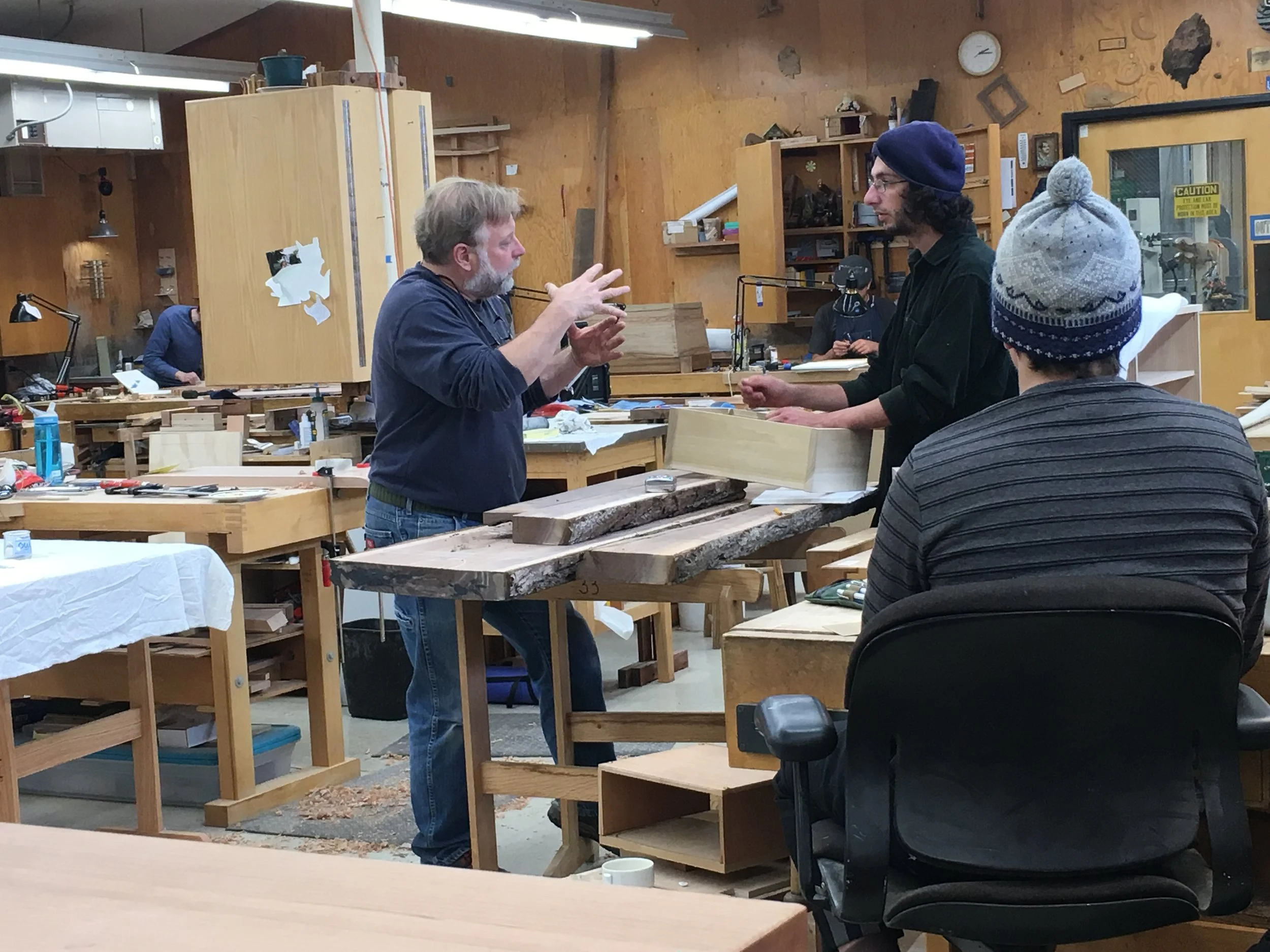
Something I talk with my clients about frequently is the difference between a custom piece of furniture and something that is mass produced, and what makes a custom piece worth the investment. The answer starts long before the piece itself is built or even conceptualized. It starts with how the maker learned to see wood in the first place. For me, that education happened at the Krenov School, and it shaped everything about how Next Bevel builds furniture today.
A Curriculum With No Shortcuts
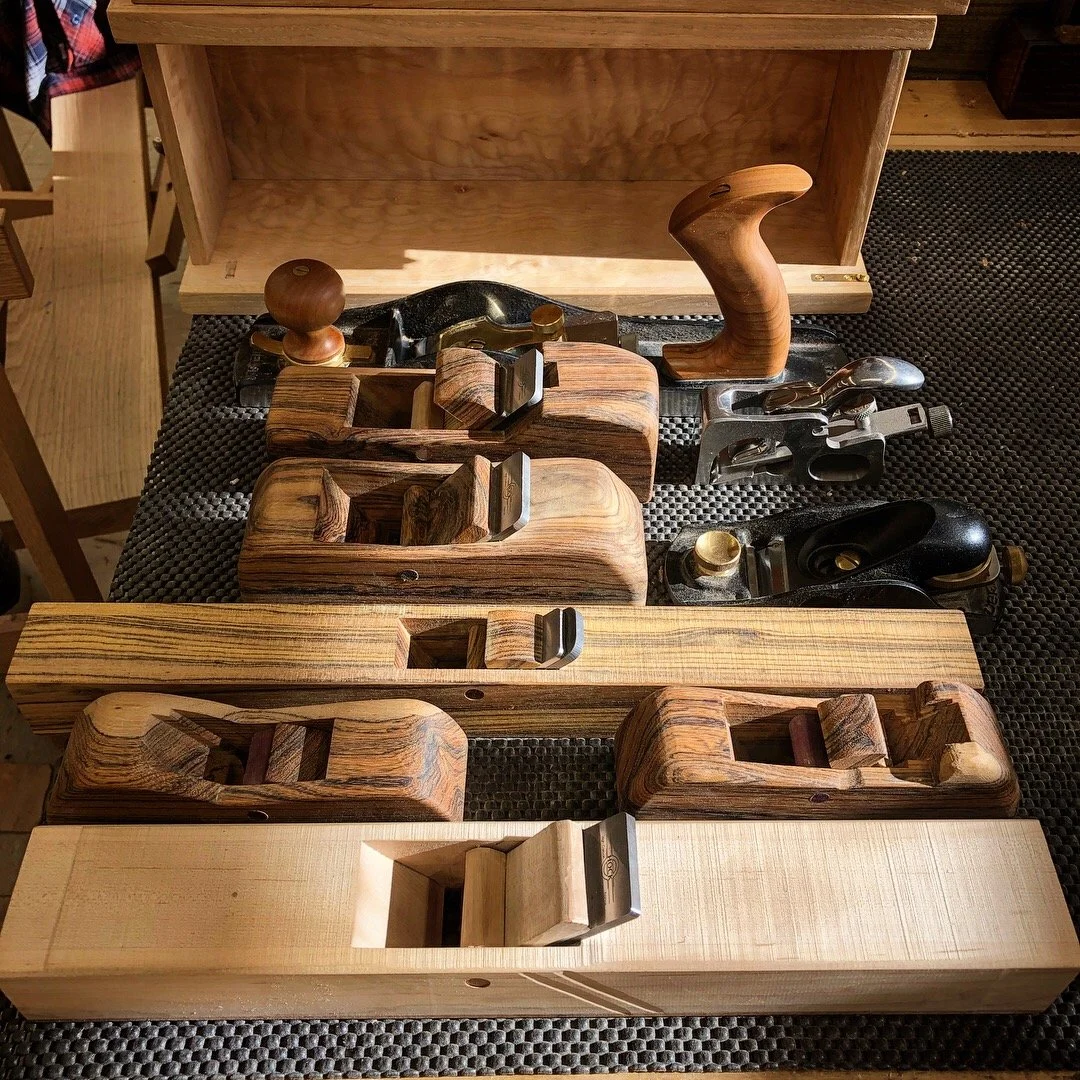
The Krenov School (formally the Fine Woodworking Program at College of the Redwoods, founded by James Krenov) runs on a simple premise: you can’t understand furniture until you’ve made your own tools to build it. The program is ten months long, and for the first month, you’re not even building furniture yet. You’re building hand planes.
Students spend weeks shaping a single wooden hand plane from raw stock: sanding the sole dead flat, fitting the blade, adjusting the mouth to a fraction of a millimeter. It sounds almost absurd until you’ve done it. That process teaches you something no power tool ever will: an intimate, physical understanding of how wood behaves, grain by grain, under an edge.
How Hand Tools Change the Furniture Itself
It’s tempting to think of hand tools as nostalgic or inefficient… a slower way to arrive at the same result a machine could produce faster. That’s not quite right.
A hand plane doesn’t just remove material. It reads the wood as it goes. Grain that reverses direction, tension in a board from how the tree grew, subtle density changes between heartwood and sapwood. A skilled hand catches all of this in real time and adjusts. A machine sander or a spinning router bit doesn’t make those judgment calls. It just removes material at a fixed rate, regardless of what the wood is trying to tell you.
Even though Next Bevel has a bunch of big machines, my daily production habits implement hand planes constantly. Not only do they allow one to be microscopically accurate, it also allows me to interact with the material in an intimate way. It’s little practices like this that differentiate a piece of furniture that is authentic and imbued with life, from a piece that is blindly thrown together among a thousand more that are identical to it in a giant factory.
Ten Months Spent Deep in the Craft
What made the Krenov program different from a weekend workshop or even a multi-year apprenticeship wasn’t just the skills, it was the immersion. Ten months, full-time, living inside a small shop with a handful of other students, all of us working through the same discipline of joinery, proportion, and hand-tool precision under master woodworkers trained directly under Krenov himself.
There’s no substitute for that kind of concentrated repetition. You dovetail a joint badly the first dozen times. By the third or fourth dozen, your hands know what “right” feels like before your eyes confirm it. That muscle memory doesn’t disappear, it’s present in every piece that leaves the Next Bevel shop today, years and hundreds of miles from that bench in the Northern Californian redwoods.
What This Means for a Commissioned Piece of Furniture
When you commission a piece from a maker trained this way, you’re not just buying a table or a cabinet. You’re buying the accumulated judgment of thousands of hours spent learning how to listen to a material most people only ever see finished. Every edge, every hand-planed surface, every joint that will still be tight in fifty years traces back to that same discipline: make the tool first, then earn the right to use it.
That’s the throughline from the Krenov School to every piece we build today: walnut chosen and read by hand, joinery cut with the same patience it took to first learn how, and a finish that lets the wood’s own character do the talking.